
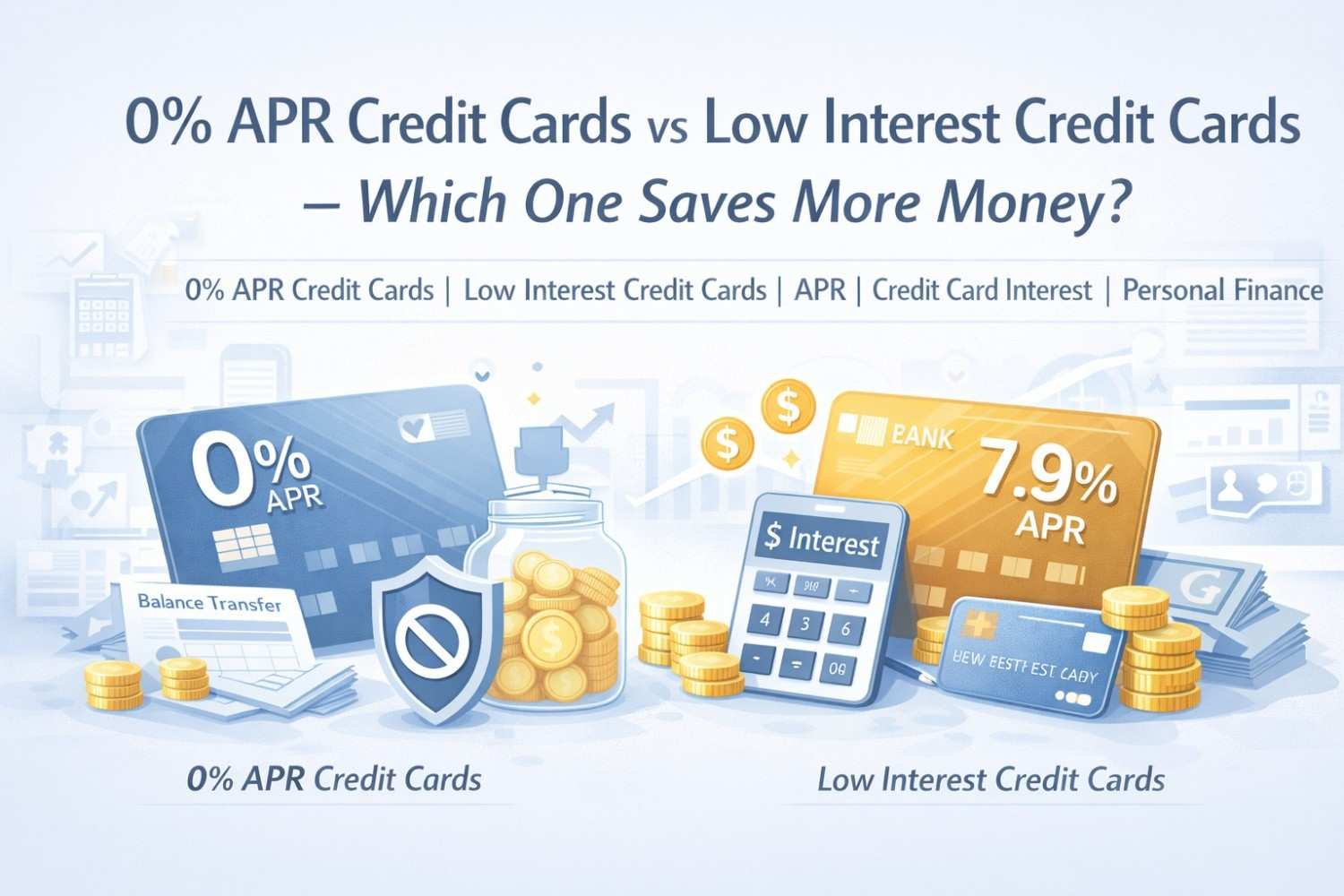
Credit cards have become an essential financial tool for millions of consumers worldwide. Whether used for daily purchases, emergency expenses, or balance transfers, the right credit card can help manage cash flow while offering rewards and financial flexibility. However, when choosing between 0% APR Credit Cards and Low Interest Credit Cards, many consumers become confused about which option actually saves more money in the long run.
Both card types offer financial advantages, but they work differently and are designed for different spending situations.
Understanding the difference between 0% APR Credit Cards and Low Interest Credit Cards is crucial if you want to minimize interest costs and manage your credit wisely. A 0% APR Credit Card usually offers a promotional period where you pay no interest on purchases or balance transfers for a specific time, often between 12–21 months. On the other hand, Low Interest Credit Cards offer a consistently reduced interest rate compared to standard credit cards.
In this detailed guide, we will break down the key differences, benefits, cost savings, and ideal use cases so you can choose the best option for your financial goals.
Understanding 0% APR Credit Cards
A 0% APR Credit Card is designed to provide a temporary interest-free period on purchases, balance transfers, or both. During this promotional window, cardholders can carry a balance without paying interest.
Key Features of 0% APR Credit Cards
- 0% introductory APR period (typically 12–21 months)
- Ideal for balance transfers and large purchases
- Opportunity to pay down debt without interest
- Often comes with balance transfer fees
Because of these benefits, many consumers use 0% APR Credit Cards for debt consolidation and large planned expenses.
Understanding Low Interest Credit Cards
A Low Interest Credit Card offers a reduced interest rate compared to standard credit cards. Instead of a temporary promotional rate, these cards provide a consistently lower APR over time.
Key Features of Low Interest Credit Cards
- Lower ongoing APR than regular credit cards
- Suitable for long-term borrowing
- Less pressure to pay off balances quickly
- Usually fewer promotional offers
For individuals who often carry a balance, Low Interest Credit Cards can help reduce total interest costs over time.
Step-by-Step Comparison: 0% APR Credit Cards vs Low Interest Credit Cards
1. Interest Rate Structure
The biggest difference lies in how interest rates are applied.
0% APR Credit Cards
- Offer 0% interest during the promotional period
- After the promo ends, the APR can increase significantly
Low Interest Credit Cards
- Offer a consistently lower APR
- No temporary promotional period required
If you can repay your balance before the promotional period ends, 0% APR Credit Cards often provide the greatest savings.
2. Ideal Usage Scenario
Best Uses for 0% APR Credit Cards
- Paying off existing credit card debt
- Financing large purchases
- Managing short-term financial needs
Best Uses for Low Interest Credit Cards
- Carrying balances for longer periods
- Avoiding sudden APR increases
- Maintaining predictable interest costs
3. Balance Transfer Opportunities
One of the most popular uses of 0% APR Credit Cards is balance transfers.
- Consolidating multiple debts
- Paying off balances faster
- Saving hundreds in interest charges
However, balance transfers often include 3%–5% transfer fees, which should be considered when calculating savings.
4. Long-Term Interest Costs
If balances remain unpaid after the promotional period, interest can accumulate quickly.
Example:
- Balance: $5,000
- Standard credit card APR: 22%
- Low interest card APR: 12%
A Low Interest Credit Card can save significant money if the balance lasts several years.
5. Credit Score Requirements
Both card types typically require good to excellent credit.
Factors that affect approval include:
- Credit score
- Credit history length
- Income level
- Existing debt
Consumers with strong credit profiles often qualify for the best 0% APR Credit Cards with longer promotional periods.
Key Benefits of 0% APR Credit Cards
- Interest-Free Financing: No interest during the promotional period.
- Faster Debt Repayment: Payments go directly toward the principal balance.
- Balance Transfer Savings: Useful for consolidating high-interest debt.
- Large Purchase Flexibility: Finance major purchases without immediate interest.
Key Benefits of Low Interest Credit Cards
- Stable Interest Rates
- Better for Long-Term Balances
- Predictable Borrowing Costs
- Lower Risk of Interest Shock
Cost Comparison Example
| Scenario | 0% APR Credit Card | Low Interest Credit Card |
|---|---|---|
| Balance | $5,000 | $5,000 |
| Interest Rate | 0% for 15 months | 12% ongoing |
| Monthly Payment | $333 | $333 |
| Interest Paid | $0 if paid in promo period | ~$325 |
| After Promo Period | APR may increase to 20%+ | Remains around 12% |
Which One Saves More Money?
When comparing 0% APR Credit Cards vs Low Interest Credit Cards, the answer depends on your repayment strategy.
You will save more money with 0% APR Credit Cards if:
- You can repay the balance during the promotional period
- You want to avoid interest on large purchases
- You are consolidating high-interest debt
Low Interest Credit Cards may be better if:
- You expect to carry balances for a long time
- You prefer stable interest rates
- You want predictable borrowing costs
Smart Strategies to Maximize Savings
- Always Pay More Than the Minimum: Reduces total interest.
- Track Promotional Periods: Pay off balances before promo ends.
- Avoid Unnecessary Spending: Use credit responsibly.
- Monitor Your Credit Score: Higher scores qualify for better rates.
Conclusion
Choosing between 0% APR Credit Cards vs Low Interest Credit Cards ultimately depends on how you plan to use the card and how quickly you can repay your balance.
If your goal is to finance a large purchase or consolidate existing debt without paying interest, a 0% APR Credit Card can provide significant short-term savings. As long as you pay off the balance within the promotional period, you can avoid interest completely.
However, if you expect to carry a balance for a long time and prefer predictable borrowing costs, a Low Interest Credit Card may be the better option. These cards offer stable APR rates and reduce the risk of sudden interest increases after promotional offers expire.
By understanding your financial habits and repayment ability, you can choose the credit card that saves the most money while helping you manage your finances responsibly.